The material that redefines lightness and strength
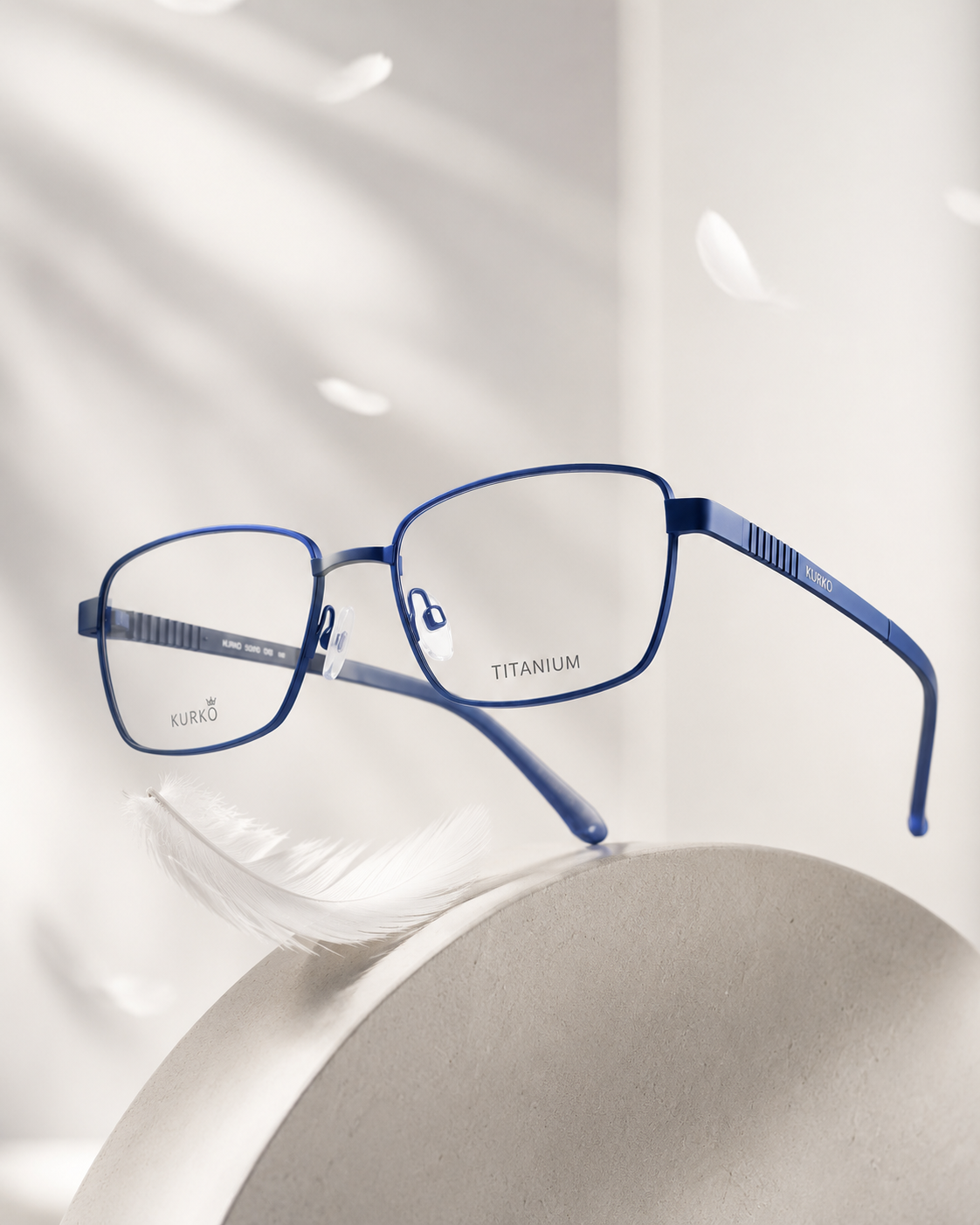
Not all frames are created equal. Titanium combines lightness, strength, and comfort to create glasses designed to last a long time.
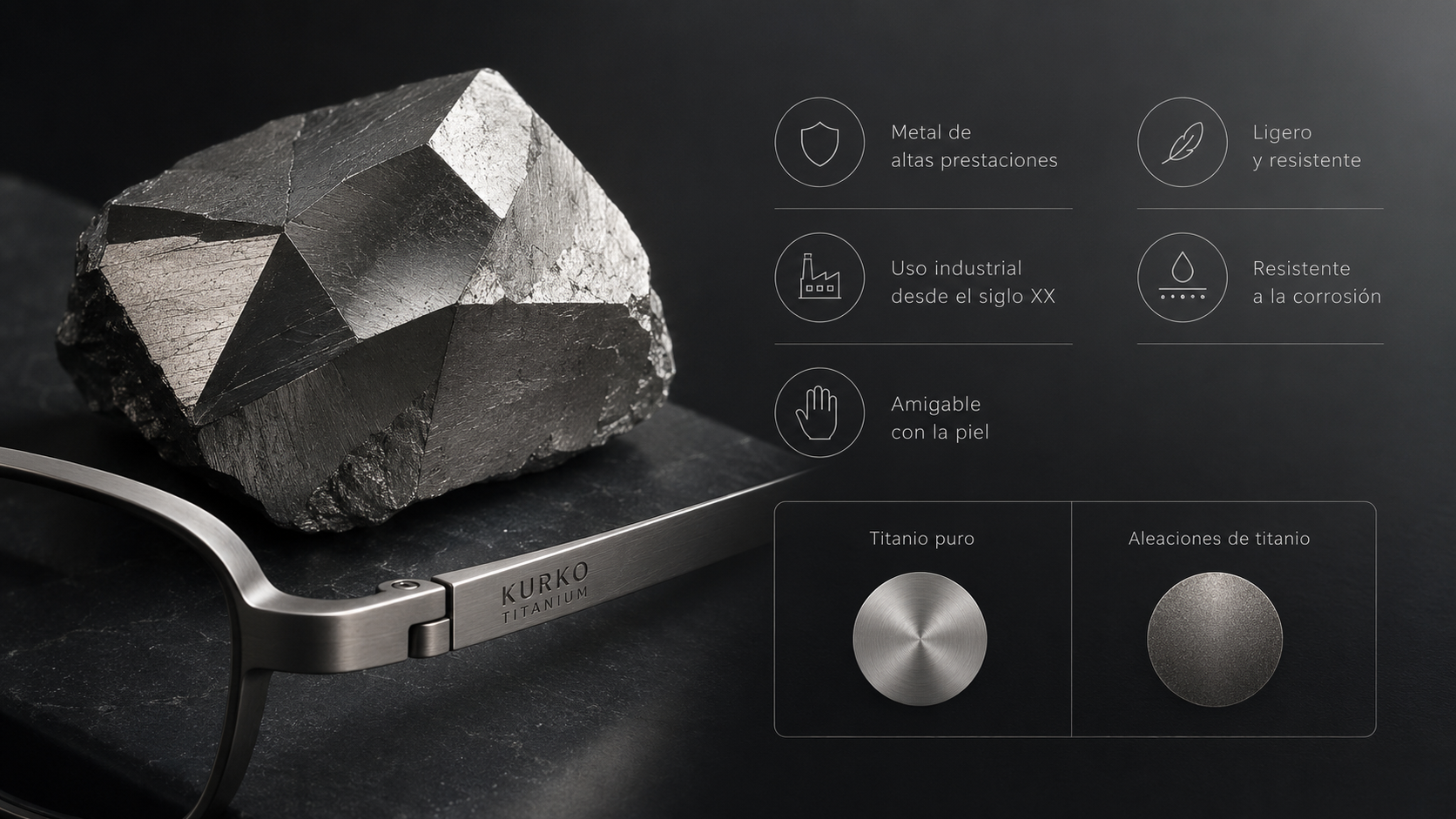
Titanium is a metal used when weight reduction is needed without sacrificing strength. Its combination of physical, mechanical, and chemical properties allows it to be used in products that must withstand heavy use, demanding conditions, or prolonged contact with the body.
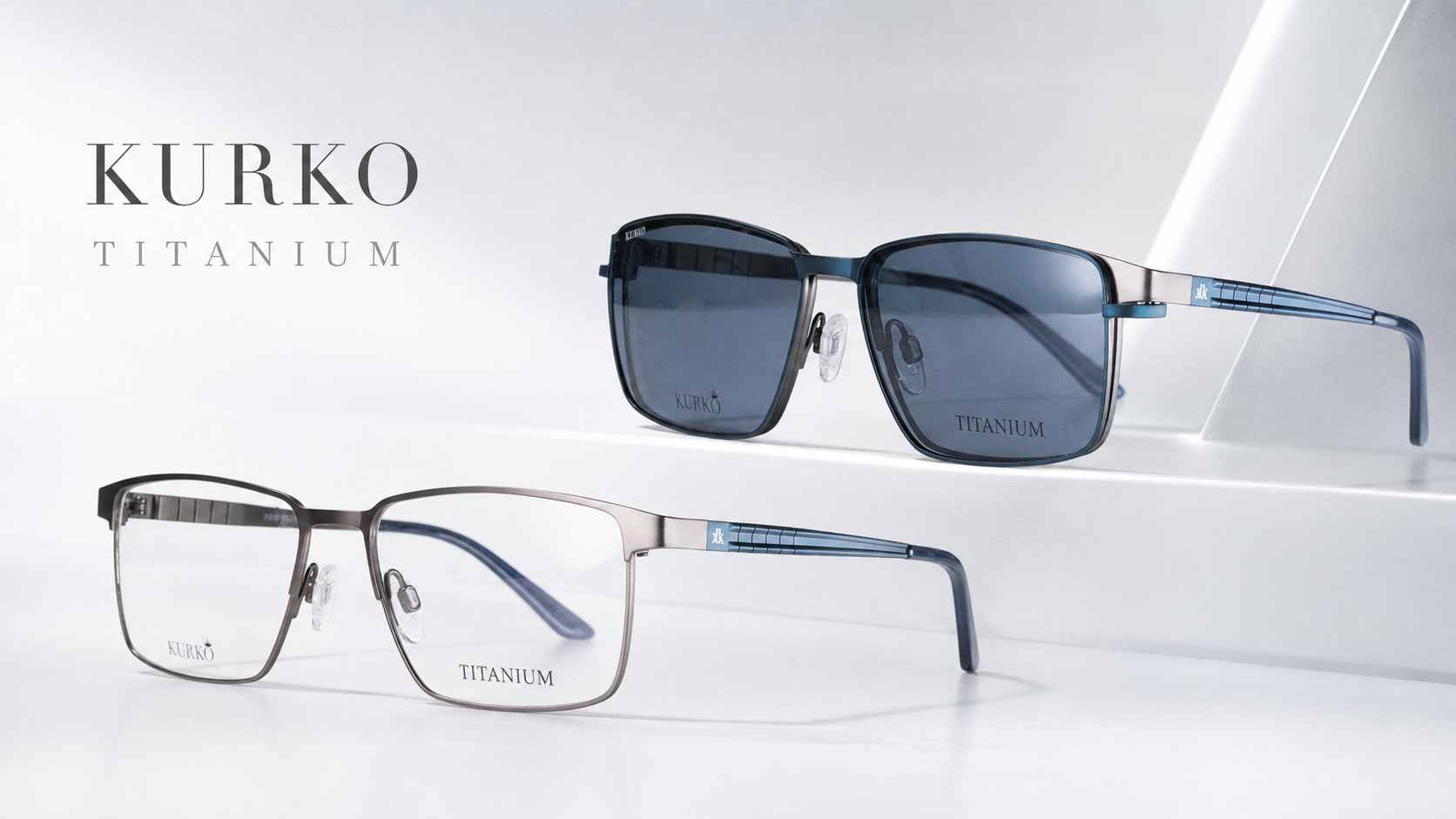
At KURKO we work with titanium with a clear philosophy: to create lighter, stronger and more comfortable frames, without sacrificing an elegant and timeless design.
Technology and craftsmanship combined to offer you glasses that stand out for their quality, not their weight.
At KURKO, we work with titanium and titanium alloys selected for their lightness, strength, flexibility, and stability. This choice allows us to create thin, comfortable, and durable frames, designed to maintain their performance even with intensive daily use.
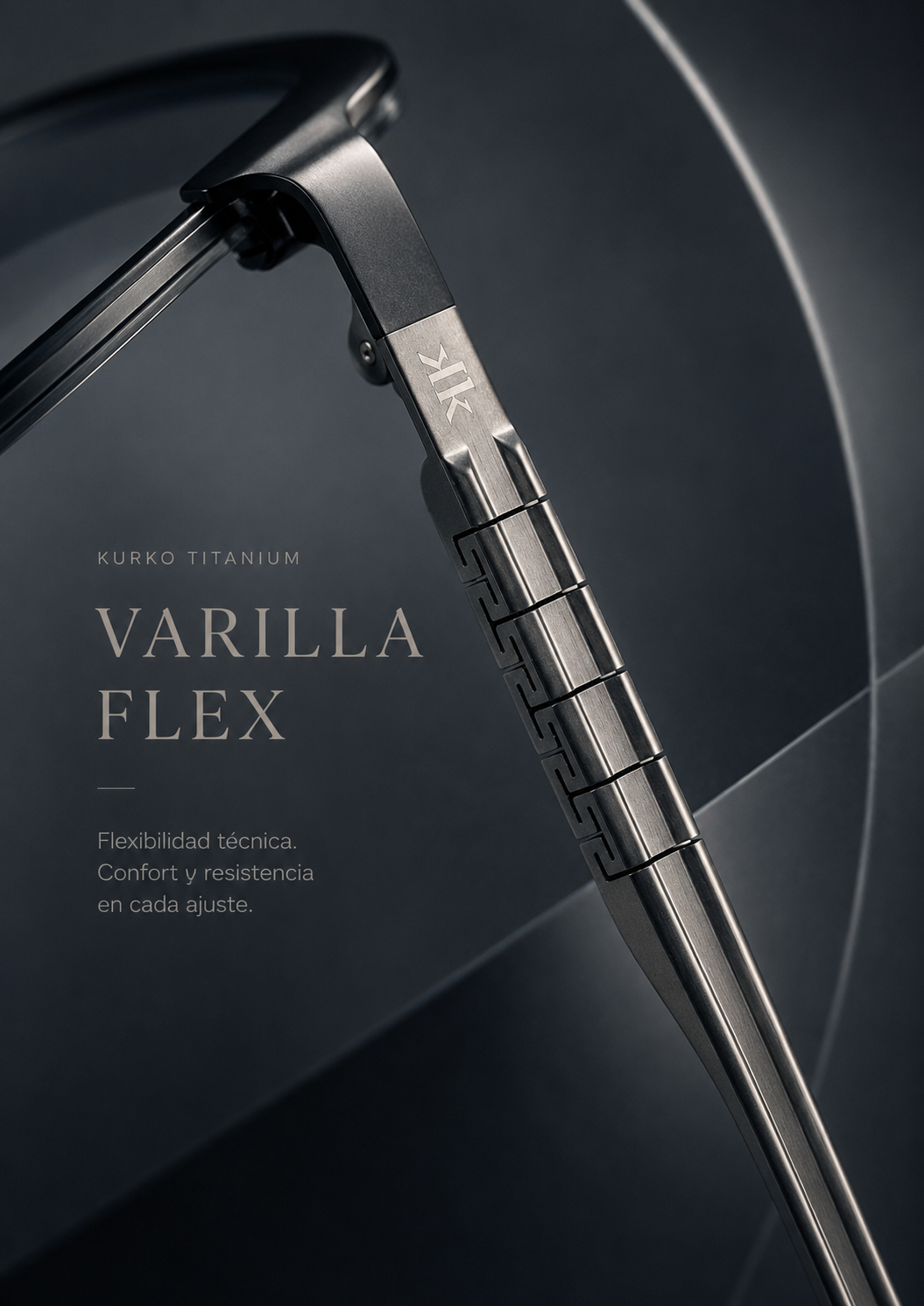
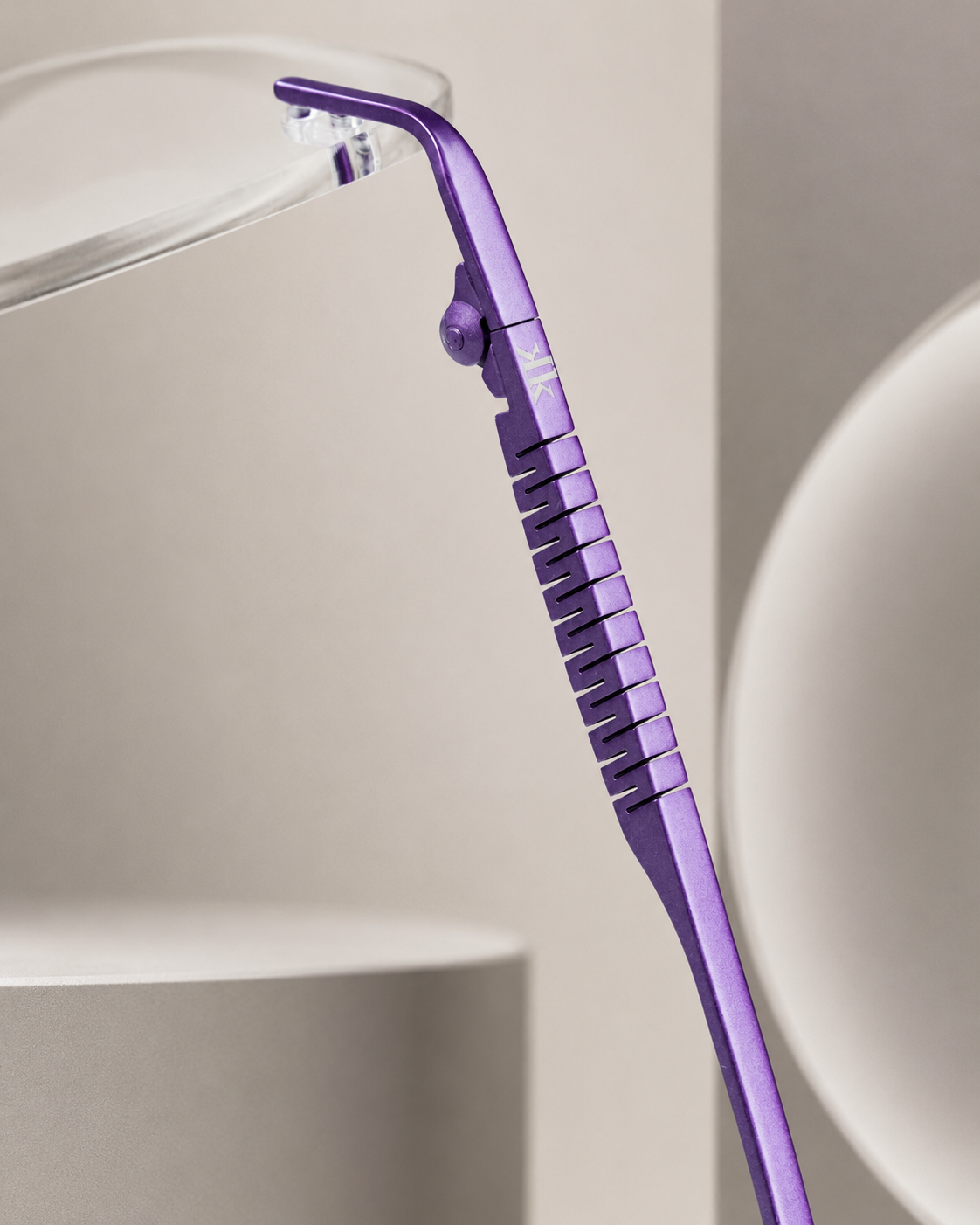
The FLEX temple incorporates a flexible zone designed to absorb small movements and adapt better to everyday use. This system provides greater comfort, reduces pressure on the head, and helps protect the frame from common openings and handling.
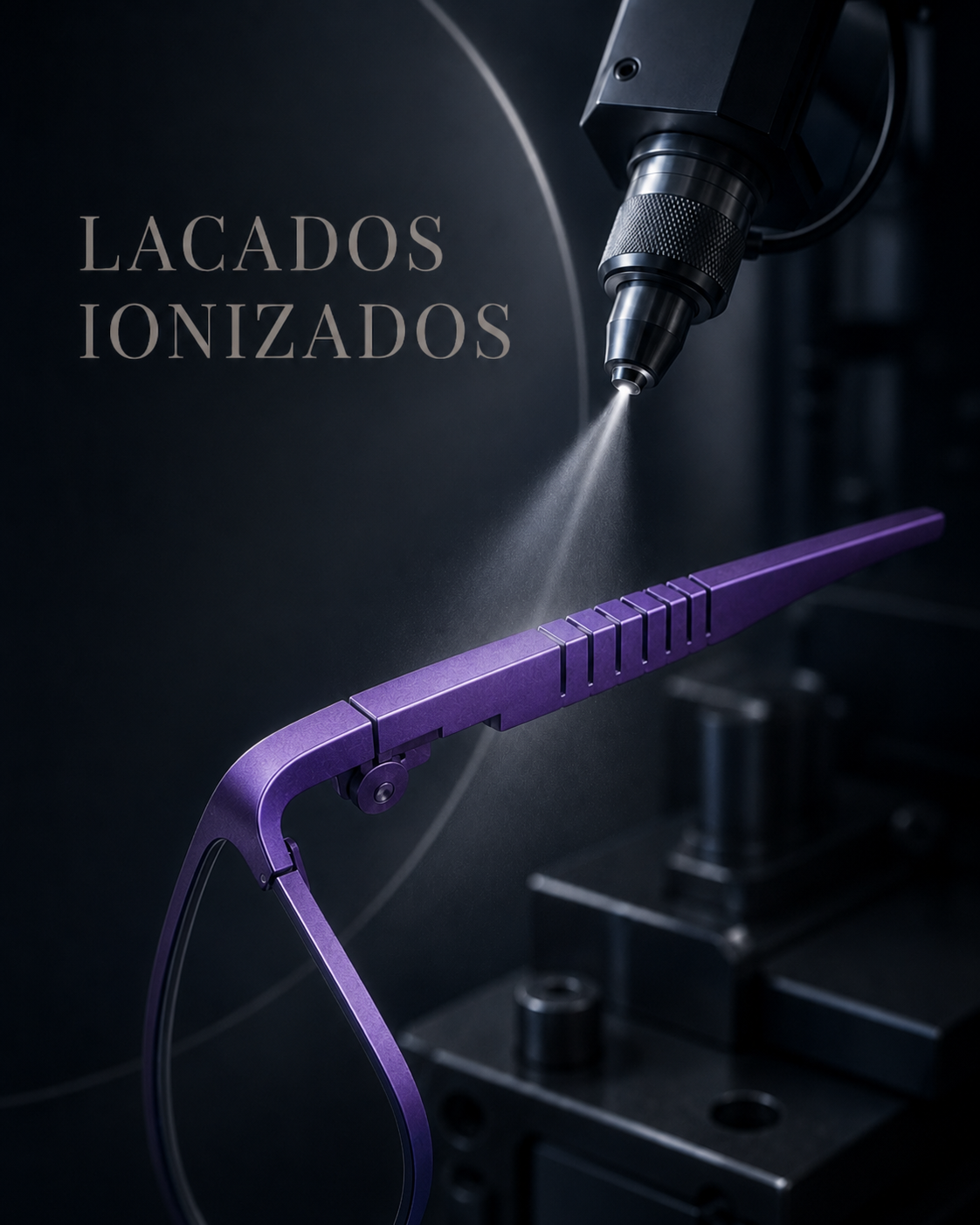
Ionized lacquers are applied using a controlled process that promotes uniform color adhesion to the titanium. The result is a cleaner, more elegant, and more durable finish that enhances the details of the frame and better preserves its appearance over time.
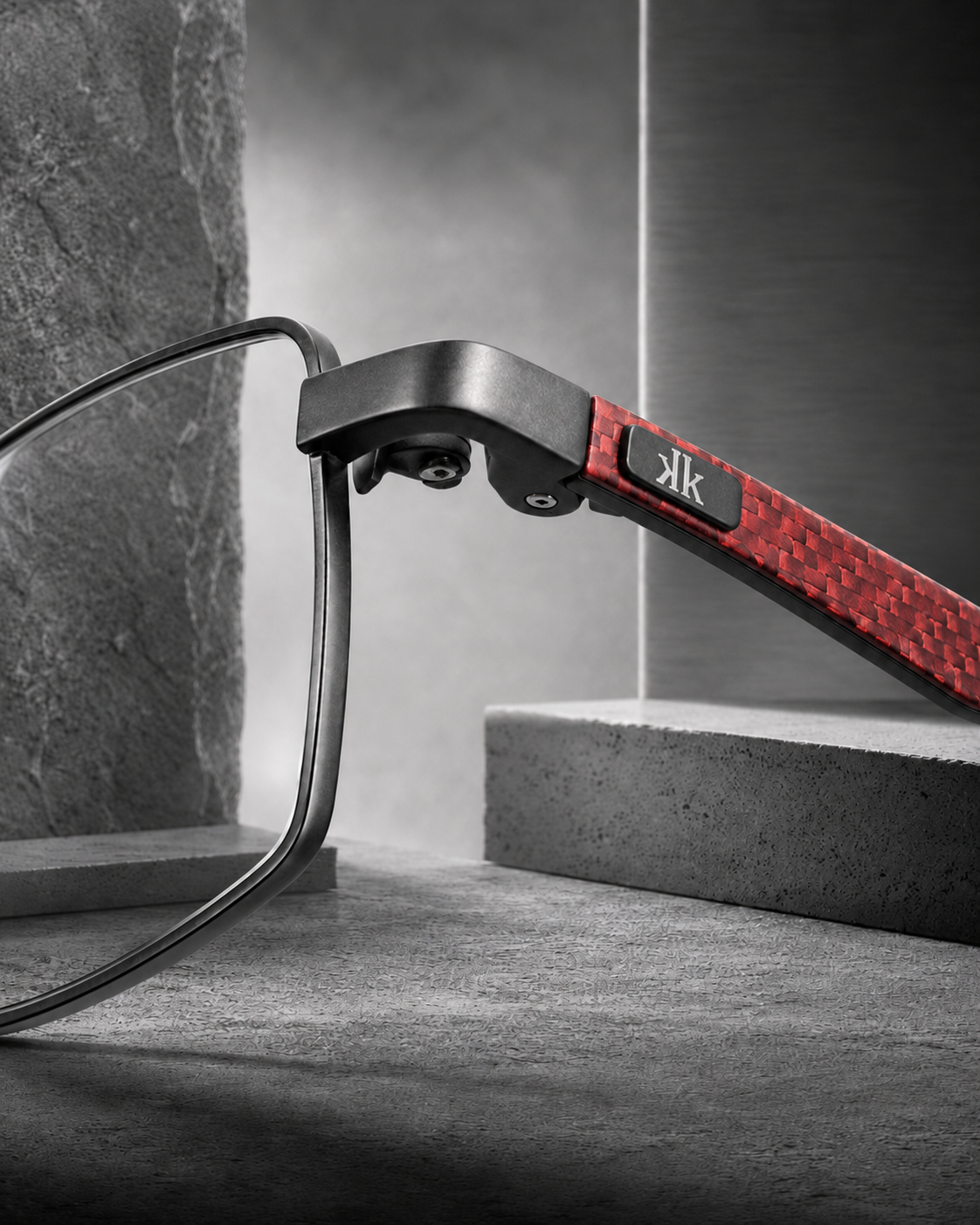
Carbon fiber is incorporated into select models to combine lightness, strength, and a technological aesthetic. Its use allows for weight reduction in certain parts and provides a distinctive visual contrast, reinforcing the innovative character of KURKO TITANIUM frames.
Hinges, screws, welds, nose pads, and finishes are all crafted with meticulous attention to ensure fit, comfort, and durability. In a titanium frame, every detail influences the final result: from the smooth opening and closing mechanism to all-day stability and comfort.
Titanium is used in optics because it allows for the creation of lightweight, strong, and very comfortable frames. It reduces the feeling of weight on the nose and ears, improves comfort during extended wear, and withstands everyday use. Furthermore, its strength and precision allow for the design of thin, stable, and durable structures, ideal for high-performance eyewear.
Wash them with lukewarm water and mild soap, and dry them with a microfiber cloth. Avoid paper, clothing, hot water, and abrasive products.
Always store them in a hard case, without placing the lenses on any surface.
Forcing the bridge, temples, or nose pads can deform the frame and affect the fit. Titanium glasses should be adjusted with professional tools.

It allows you to create strong structures with reduced weight.
It withstands stress, impacts, and continuous use.
Its surface develops a protective layer that helps preserve the material.
Certain alloys allow the manufacture of components capable of flexing and returning to their original position.
It retains its properties for long periods when properly designed and treated.
Each material offers different characteristics in terms of weight, strength, comfort, and design. This comparative guide helps you understand the main differences between titanium, stainless steel, and acetate frames.
| Feature | Titanium | Stainless steel | Acetate |
|---|---|---|---|
| Weight | Very light | Half | Variable |
| Endurance | High | High | Average |
| Mount thickness | Very fine | Fine | Usually older |
| Prolonged comfort | High | Medium-high | Variable |
| Chromatic variety | Technical finishes | Wide | Very spacious |
| Aesthetics | Technical and minimalist | Classical | Expressive |
Titanium is used in aerospace due to its exceptional balance of lightness, strength, and durability. It is a key material in components where every gram counts and where reliability is paramount.
In architecture, titanium is used in facades, roofs, and cladding due to its corrosion resistance, stability, and contemporary aesthetic. It is a material designed to last and maintain an elegant presence over time.
Titanium is a key component in the world of sports and luxury automobiles due to its ability to reduce weight without sacrificing strength. Its use in technical parts reflects precision, engineering, and a constant pursuit of performance.
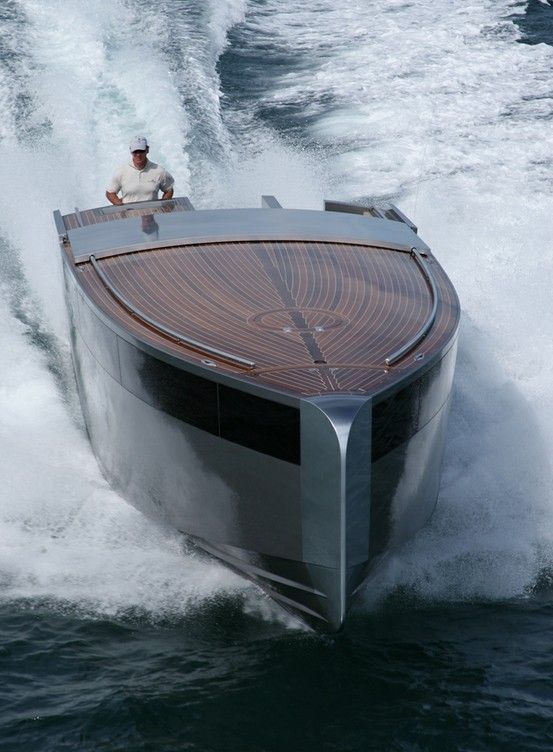
Titanium stands out in the marine industry for its exceptional resistance to humidity, salinity, and extreme conditions. It is an ideal material for applications where durability and corrosion protection are essential.
In engines, turbines, and technical components, titanium is valued for its mechanical strength, lightness, and performance under demanding conditions. Its presence in high-tech engineering sectors confirms its technological and premium nature.
Titanium has a low density compared to other metals used in frames. It offers a high strength-to-weight ratio: it can provide similar strength to steel with approximately 45% less weight. This allows for the manufacture of thin, stable, and comfortable glasses, reducing pressure on the nose and ears.
Titanium glasses are notable for combining low weight with high mechanical strength. This property helps create thin frames capable of withstanding daily use while maintaining their stability. However, their lifespan also depends on the design, hinges, finishes, and the care each model receives.
Titanium can react with oxygen, but it naturally forms a thin, protective oxide layer that isolates the metal and slows down corrosion. This is why it exhibits excellent resistance to moisture, sweat, and numerous environmental agents, and does not rust visibly like iron or conventional steel.
Pure titanium contains a very high proportion of titanium and is notable for its lightness, corrosion resistance, and good tolerance when in contact with the body. Beta titanium is an alloy designed to offer greater elasticity, adjustability, and shape recovery. In optics, it is especially useful for manufacturing temples and flexible structures. The specific composition may vary depending on the manufacturer.
Pure titanium is often a good choice for people with sensitive skin due to its chemical stability and good biocompatibility. However, not all frames labeled "titanium" have the same composition: some alloys, welds, or finishes may contain other metals. If you have a known nickel allergy, it's advisable to confirm the exact composition of the frame with your optician or the manufacturer.
First, rinse the goggles with lukewarm water to remove dust. Then, use a small amount of mild soap, rinse, and dry them with a clean microfiber cloth. Avoid very hot water, abrasive products, paper, clothing, and harsh cleaners, as these can damage the lenses and their coatings. After contact with salt water, rinse them with fresh water and store them in their case when not in use.